“These would be gone if it were not for your support all these years.”
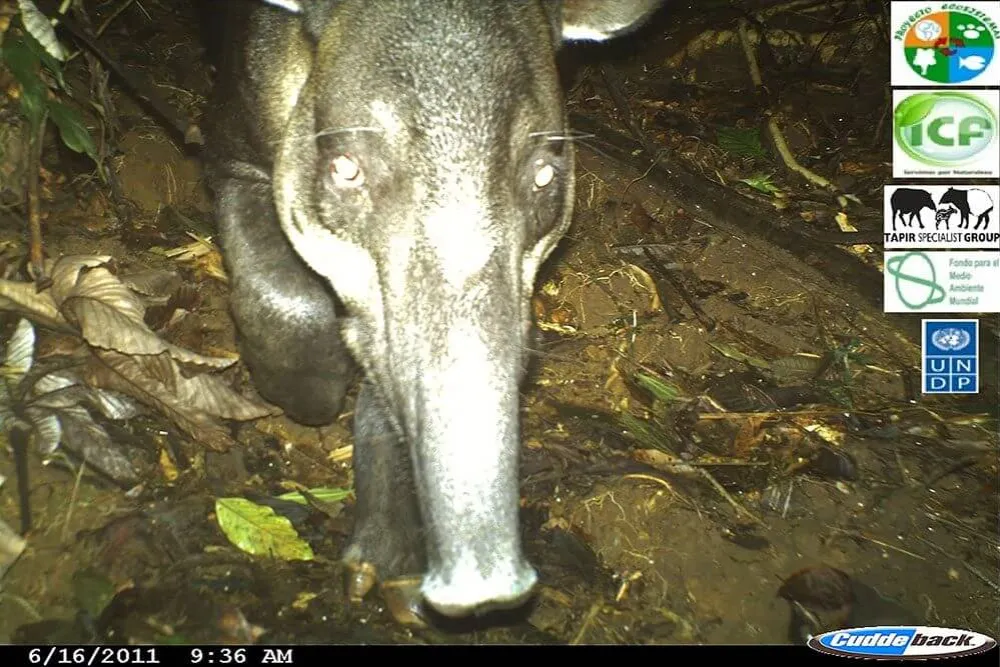
Those were the words that accompanied a single camera trap image of a Baird’s tapir in Cusuco National Park, Honduras, sent to me in late November 2022.
Exactly ten years previously, I’d published a paper demonstrating that tapirs would go extinct in that part of Honduras in the next 10 years, unless something drastic changed.
It was the summer of 2012 and I’d just found marijuana being grown deep inside Cusuco National Park, in the Merendon Mountain Range in northwestern Honduras. Deforestation and other illegal activities were on the rise, and the tapir population was dropping off a cliff. With support from Operation Wallacea, I was completing my PhD on the conservation of Baird’s tapir in Honduras, and things were not looking good for the species.
Baird’s tapir is the largest land mammal in the Neotropics. Their range extends from Mexico in the north to Ecuador in the south. They are on the Red List of Endangered Species, with their decline in numbers largely attributed to habitat loss and poaching. In Honduras, they were clinging to survival in a few isolated locations, with fewer than 500 thought to remain across the whole country.
The discovery of marijuana in Cusuco changed everything. The government couldn’t ignore what was happening in the park any more, and they authorised me to set up a team of community rangers to conduct weekly patrols and report illegal activity to the authorities.
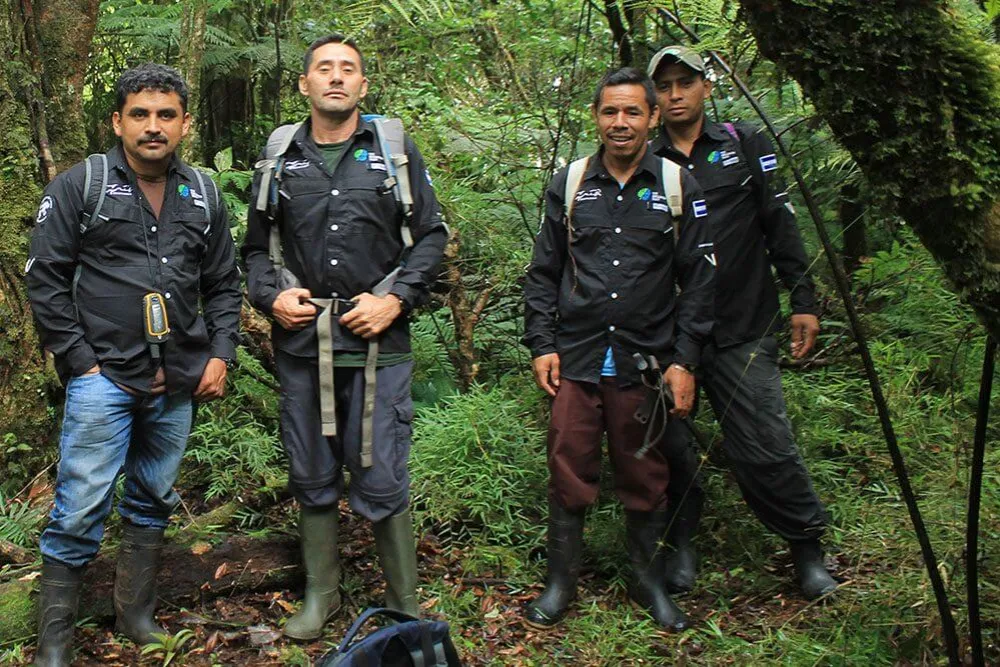
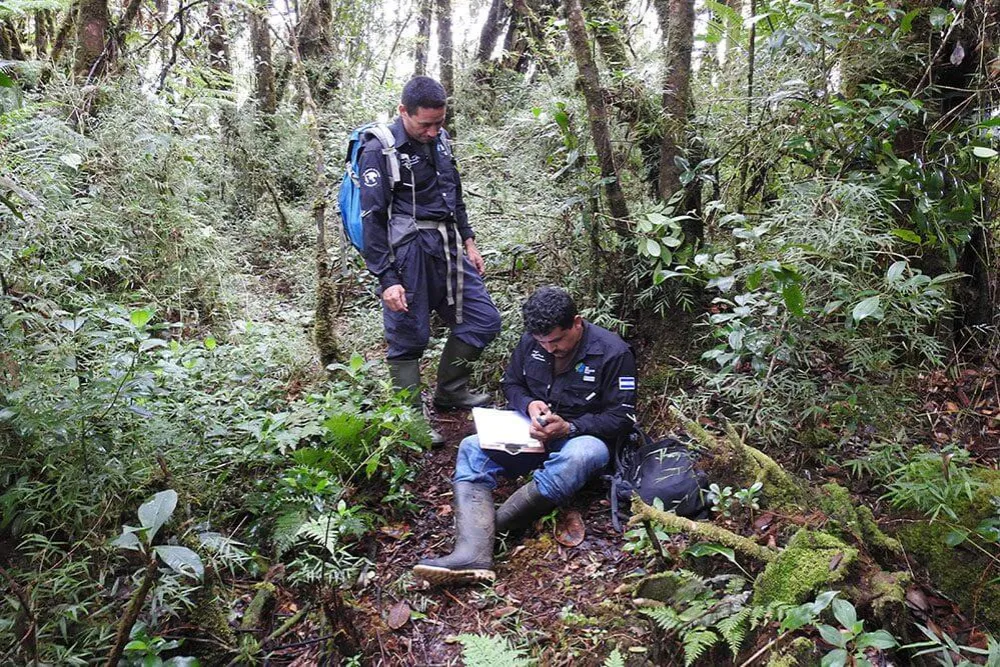
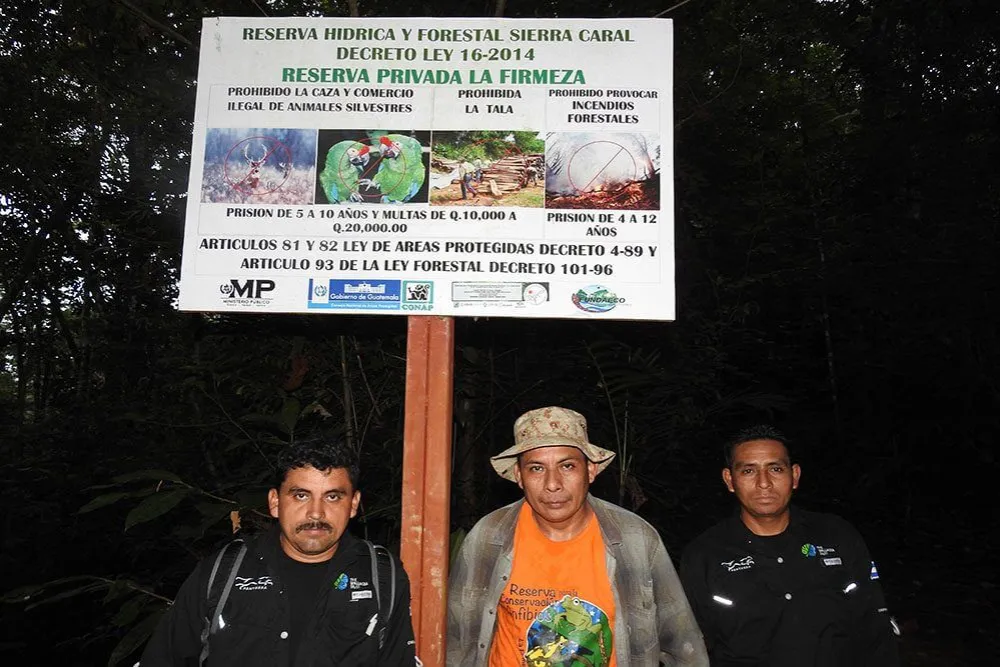
Managed by the irrepressible Franklin Castaneda from Panthera Honduras, and with financial support from both Panthera and the Wallacea Trust, the rangers – who we dubbed The Jaguars of Cusuco – began patrolling in late 2012. In the early days they discovered a lot of criminality, which came with very serious risks: one of our rangers received a credible death threat and had to escape the country.
In 2015 we implemented SMART (the Spatial Monitoring and Reporting Tool), enabling us to track and monitor patrols in unprecedented detail. Since that time, the rangers have conducted more than 2,000 patrols, covering over 25,000 km on foot in the park, recording nearly 300 incidents of poaching: hides, gunshots, cartridges and carcasses. All illegal activities in the park are logged, and when there’s live information the police and military are called in to apprehend the offenders.
This appears to have had a serious deterrent effect. When you dig into the data, the amount of poaching inside Cusuco has dropped markedly over the past 11 years. This in itself would be a positive result, but to really demonstrate impact we had show that we’d reversed the decline of tapirs, and prevented their local extinction.
That camera trap image in November 2022 was the proof we needed that things were changing. Seven months later another image, this time of a mother and baby. And then in the summer of 2024, video footage of a different mother and baby! After so many years of decline, and on the verge of disappearing entirely, the tapirs are breeding again.
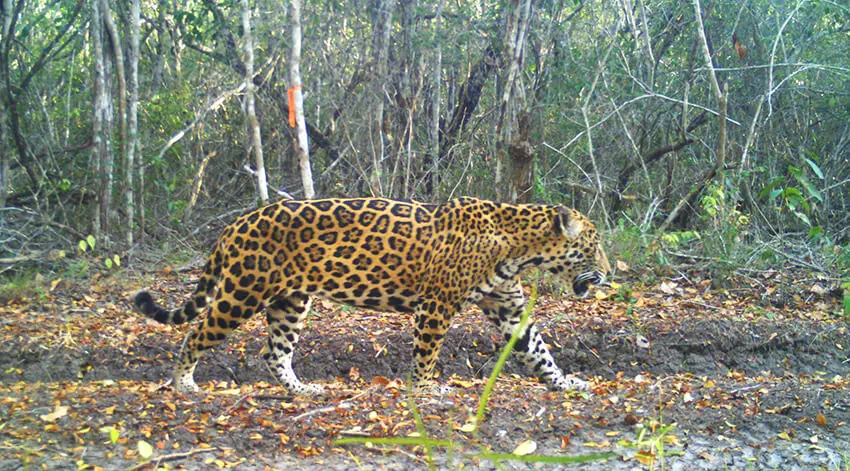
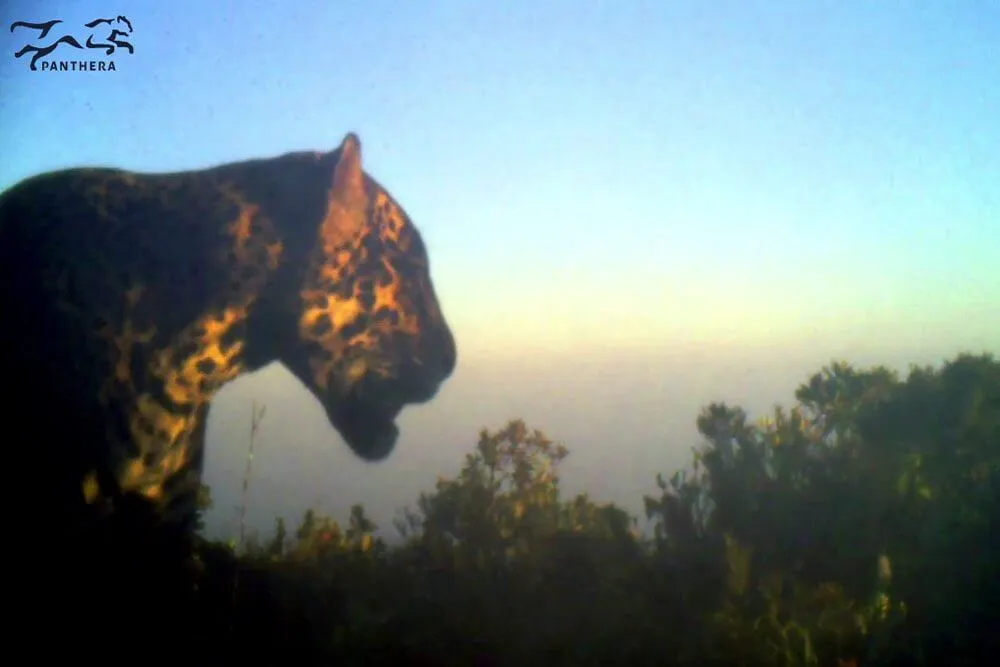
The increase in security isn’t just good for tapirs. Cusuco is home to an astonishing amount of wildlife, including nine species of amphibian that are only found in that park and nowhere else on earth. Panthera’s camera traps have also shown the park is home to a wide range of mammals, including coati, tayra, peccaries, and the first ever record of puma. In 2016 – and again in 2026 – the camera traps struck gold with a so-called ‘cloud jaguar’, crossing the park via its highest point, way up in the cloud forest.
The reduction in crime is also good for the people who live near Cusuco, who rely on the park for clean water and many other aspects of their livelihood, and who don’t wish to have criminals operating in their midst.
Our ranger team, the Jaguars of Cusuco, grew to 12 under the government’s National Forest Ranger scheme, enabling a huge increase in patrolling, and one of our rangers – Mito Alvarenga – received a national award for his service. In 2025 the new government disbanded the scheme, shrinking our team back to four again, jeopardising the gains we have made over the past 14 years.
And so our work continues. So long as we can raise the funds to keep the Jaguars of Cusuco employed, they will keep Cusuco safe, and tapirs will continue to survive in this remote and spectacular corner of Honduras.
Related links:
https://panthera.org/blog-post/cloud-jaguar-returns
https://onlinelibrary.wiley.com/doi/abs/10.1111/j.1749-4877.2012.00312.x
Your support plays an important role in enabling our work. Through donations, we are able to fund practical conservation projects and provide opportunities for students to gain hands-on experience in environmental science.